
AI Voice Agents for UK Hospitality: The Complete 2026 Guide to Transforming Guest Experience
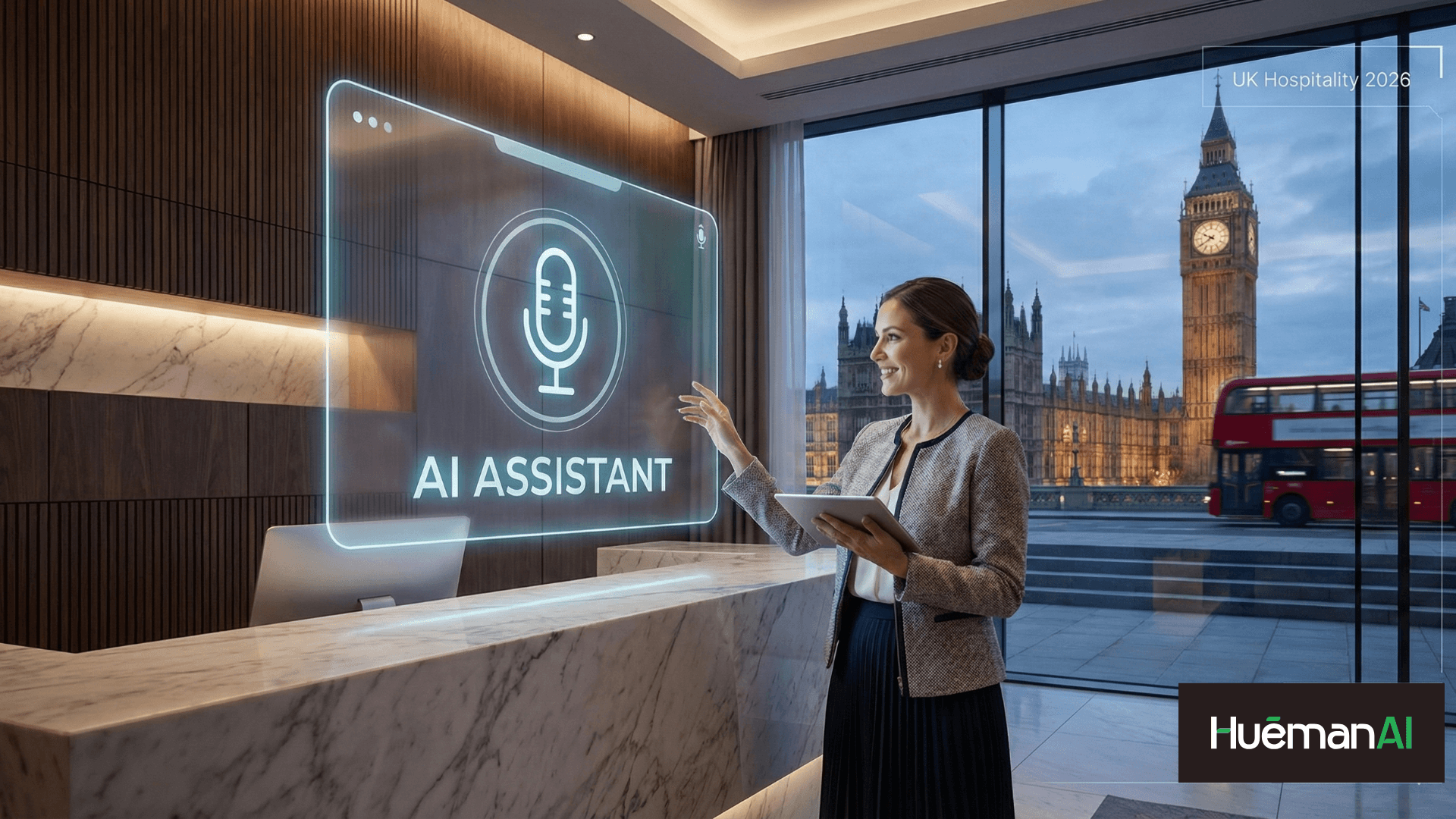
The British hospitality sector stands at a pivotal crossroads. With 87% of UK hotels reporting persistent staffing challenges and guest expectations reaching unprecedented heights, innovative technology has moved from optional to essential. Enter AI voice agents—the intelligent solution reshaping how hotels, restaurants, and hospitality venues across the United Kingdom deliver service excellence.
Up to 40% of calls to UK hospitality businesses go unanswered, translating to an average revenue loss exceeding £100,000 annually per property.
Recent industry data reveals a stark reality that demands immediate attention. For an industry where every interaction counts, this represents not just missed opportunities but a fundamental challenge to competitiveness in an increasingly demanding marketplace.
This comprehensive guide explores how AI voice agents are revolutionising UK hospitality operations, delivering 24/7 service capabilities whilst reducing operational costs by up to 35%. Whether you manage a boutique B&B in the Cotswolds or oversee multiple properties across London, understanding this technology is crucial for maintaining competitive advantage in 2026. (New to the topic? Start with our foundational guide on what an AI voice agent is and how it works, including real per-minute pricing layers and latency budgets).
What Are AI Voice Agents in Hospitality?
AI voice agents represent a quantum leap beyond traditional automated phone systems. Unlike rigid Interactive Voice Response (IVR) systems that frustrate 61% of consumers, modern AI voice agents leverage sophisticated conversational AI to deliver genuinely helpful, human-like interactions.
These intelligent systems combine several cutting-edge technologies:
Natural Language Processing (NLP) enables the AI to understand British English in all its regional variations—from Geordie to Cornish accents—whilst seamlessly handling international guests speaking dozens of languages. The technology processes context, intent, and nuance, allowing for natural conversations rather than robotic exchanges.
Automatic Speech Recognition (ASR) accurately transcribes spoken language in real-time, even managing background noise typical of busy reception areas or bustling restaurant environments. Advanced systems achieve 95%+ accuracy, ensuring guests never need to repeat themselves.
Text-to-Speech (TTS) technology has evolved dramatically. Today's AI voice agents speak with natural British voices—complete with appropriate intonation, pacing, and cultural awareness—that guests often cannot distinguish from human staff.
Machine Learning allows these systems to continuously improve, learning from every interaction to handle queries more effectively, recognise patterns in guest requests, and adapt to your property's unique offerings and policies.
The result is a digital concierge that handles reservations, answers questions, processes special requests, and provides information—all whilst maintaining the warmth and professionalism your brand demands.
Why UK Hospitality Businesses Are Adopting AI Voice Technology
The adoption of AI voice agents across British hospitality isn't driven by technological fascination—it's a strategic response to real operational challenges affecting profitability and guest satisfaction.
The Persistent Staffing Crisis
The UK hospitality sector faces an acute labour shortage. Post-pandemic workforce shifts, Brexit-related challenges, and changing career preferences have created a perfect storm. Properties struggle to maintain adequate front-line staff, particularly for overnight shifts, weekends, and seasonal peaks.
AI voice agents provide consistent coverage without sick days, holidays, or scheduling conflicts. A boutique hotel in Edinburgh recently reported reducing front desk staffing pressure by 40% after implementing 24/7 AI voice assistance, whilst simultaneously improving guest service scores.
Financial Pressure and Rising Costs
UK hospitality businesses face mounting cost pressures: energy bills, food costs, and wage inflation all squeeze margins. Yet cutting corners on guest service damages reputation and revenue.
Properties implementing AI voice agents report remarkable ROI. A London hotel group documented £150,000 in annual savings per property through reduced missed bookings, optimised staffing, and increased ancillary revenue.
Stop Losing Bookings to Unanswered Calls
Join the leading UK hotels and restaurants using HuemanAI's autonomous voice receptionists to capture every cover, 24/7.
Book your personalized demo today.
The technology typically pays for itself within 3-6 months, then continues generating positive returns.
Elevated Guest Expectations
Modern travellers expect immediate responses, multilingual support, and personalised service. They want to book at midnight, modify reservations from overseas, and receive instant answers about amenities, local attractions, or dietary accommodations.
Human staff, however dedicated, cannot provide truly 24/7 coverage at the service level guests demand. AI voice sales agents fill this gap, ensuring every caller receives prompt, knowledgeable assistance regardless of when they contact your property.
Competitive Differentiation
As 70% of UK hotel executives prioritise AI investment in 2026, early adopters gain significant competitive advantages. Properties offering seamless, always-available voice assistance differentiate themselves in crowded marketplaces, attract tech-savvy travellers, and demonstrate commitment to service excellence.
Transformative Benefits for UK Hospitality Operations
The impact of AI voice agents extends far beyond answering phones. These systems fundamentally transform how hospitality businesses operate and compete.
Capturing Every Revenue Opportunity
Every unanswered call represents potential revenue walking away. Research shows 83% of potential guests will contact a competitor if their call goes to voicemail. AI voice agents ensure you never miss another booking opportunity.
A Manchester restaurant implementing AI phone assistance reported capturing an additional £12,000 monthly in takeaway orders previously lost to unanswered calls during peak hours. The system handles simultaneous calls effortlessly, something impossible for human staff.
Hotels using AI voice agents report 25% increases in direct bookings by making reservations frictionless. The AI can check availability, quote prices including current promotions, process bookings, and send confirmations—all in a single call lasting minutes.
Intelligent Upselling and Revenue Maximisation
AI voice agents excel at revenue optimisation through consistent, non-pushy upselling. The technology identifies opportunities human staff might miss when rushed or distracted.
For hotels, this means suggesting room upgrades, spa packages, early check-in, or late checkout at precisely the right moments in the booking conversation. A Cotswolds property reported 15% of callers accepting upsells suggested by their AI agent, generating £8,000 additional monthly revenue.
Restaurants benefit similarly. AI voice agents naturally suggest starters, premium menu items, or desserts whilst taking orders—just as trained servers do—but with perfect consistency. Because the AI never forgets and never gets tired, upsell completion rates often exceed human performance.
Operational Efficiency and Cost Reduction
AI voice agents handle repetitive queries—hours, directions, parking, pet policies, amenities—freeing your human team for higher-value interactions. Properties report staff spending 60% less time on basic phone enquiries, allowing them to focus on in-person guest experiences where human warmth truly matters.
The efficiency gains compound. Front desk teams handle check-ins more smoothly when not constantly interrupted by phones. Housekeeping supervisors spend less time fielding calls about towel requests. Restaurant hosts can focus on greeting and seating rather than managing takeaway orders by phone.
A London hotel calculated that their AI voice agent handles approximately 450 calls weekly—equivalent to 20 hours of staff time—allowing reallocation of human resources to guest-facing roles that directly enhance satisfaction scores.
Multilingual Capabilities for International Guests
The UK welcomes visitors from across the globe. AI voice agents comfortably converse in dozens of languages, eliminating language barriers that frustrate guests and staff alike.
A Liverpool hotel serving significant Chinese and Spanish tourist markets implemented multilingual AI voice assistance and saw international direct bookings increase 35%. Guests appreciated speaking their native language when making reservations or requesting information, whilst staff appreciated reduced communication challenges.
Data-Driven Decision Making
AI voice agents generate valuable insights human phone handling cannot match. Every conversation is analysed for patterns, common questions, booking trends, and guest preferences.
This intelligence helps hospitality managers make informed decisions about offerings, marketing, staffing, and operations. Identifying that 40% of callers ask about a specific amenity might prompt you to feature it prominently in marketing materials. Recognising peak call times enables better staff scheduling.
A York B&B discovered through AI conversation analytics that many potential guests were concerned about parking—a question previously thought minor. After prominently addressing parking on their website and in AI responses, booking conversion improved 12%.
Consistent Brand Experience
Human staff have varying levels of knowledge, enthusiasm, and communication skills—particularly during onboarding or high-turnover periods. AI voice agents deliver perfectly consistent interactions aligned with your brand standards.
The AI knows every menu item, room type, policy, and local recommendation. It uses approved language, maintains appropriate tone, and represents your property professionally every single time. This consistency builds guest confidence and reinforces brand positioning.
Ready to Transform Your Guest Experience?
Discover how HuemanAI's intelligent voice agents can help your UK hospitality business capture more bookings, reduce costs, and deliver exceptional 24/7 service.
Key Use Cases Transforming UK Hospitality
AI voice agents excel across numerous hospitality scenarios, each delivering measurable operational improvements and enhanced guest experiences.
Automated Reservation Management
The most common and immediately valuable application is reservation handling. AI voice agents check availability across your property management system in real-time, quote accurate pricing including seasonal rates and promotions, process bookings with complete guest information, handle modifications and cancellations according to your policies, and send automated confirmations via email or SMS.
For restaurants, this extends to table reservations, managing party sizes and timing, tracking special occasions, noting dietary requirements, and even processing deposits for larger groups.
A Cambridge restaurant group implemented AI reservation assistance and eliminated booking conflicts whilst reducing no-shows by 25% through automated confirmation calls and SMS reminders the AI sends without staff intervention.
Comprehensive Guest Information
Guests ring properties with countless questions before, during, and after their stays. AI voice agents answer comprehensively about amenities and services, room features and options, pet policies, accessibility accommodations, parking arrangements, Wi-Fi details, breakfast times and options, nearby attractions and recommendations, local transport links, and special requests from extra pillows to champagne in-room.
The AI accesses your complete knowledge base, ensuring accurate, detailed responses that might require human staff to check multiple sources or transfer calls.
Takeaway and Delivery Order Processing
UK restaurants face intense competition for takeaway and delivery business. AI voice agents transform phone ordering into a revenue generator rather than a staff burden.
The AI walks callers through the menu, suggests items based on preferences, accurately captures complex orders including modifications, processes payments securely, provides collection or delivery timing, and integrates with kitchen display systems.
A Bristol pizza restaurant reported 30% increases in phone orders after implementing AI assistance, with average order values rising £4.50 due to consistent upsell suggestions.
Event and Group Booking Enquiries
Group bookings, corporate events, weddings, and conference enquiries require significant information gathering. AI voice agents excel at initial qualification, capturing event details like dates, attendee numbers, space requirements, and catering preferences before seamlessly transferring qualified leads to your events team.
This filtering ensures your specialists spend time with genuine prospects rather than fielding preliminary enquiries, whilst potential clients receive immediate engagement rather than waiting for callbacks.
Guest Services During Stays
For hotels, AI voice agents can handle in-room requests through integration with property management systems. Guests call and request extra towels, schedule wake-up calls, order room service, arrange transport, request late checkout, or report minor issues.
The AI logs requests appropriately, dispatches them to relevant departments, and confirms completion—all without front desk involvement unless escalation becomes necessary.
Post-Stay Engagement
The guest relationship shouldn't end at checkout. AI voice agents can conduct follow-up calls for feedback collection, offering recovery for negative experiences, encouraging reviews, promoting loyalty programmes, or announcing special offers.
This proactive engagement, delivered at scale without staff time investment, strengthens guest relationships and drives repeat bookings.
Implementing AI Voice Agents: A Practical Guide for UK Hospitality
Successfully deploying AI voice technology requires thoughtful planning and execution. Here's how UK hospitality businesses can implement these systems effectively.
Step 1: Assess Your Needs and Goals
Begin by identifying specific pain points and objectives. Are you primarily seeking to capture missed calls? Reduce front desk workload? Improve multilingual support? Increase direct bookings?
Document current call volumes, peak times, common enquiry types, and existing staffing challenges. This baseline establishes clear metrics for measuring AI implementation success.
Step 2: Choose the Right AI Voice Platform
Not all AI voice solutions suit every hospitality business. Consider these factors when evaluating providers:
Integration capabilities with your existing property management system, point-of-sale system, reservation platforms like OpenTable or Resy, payment processors, and CRM tools.
Language and accent support ensuring the AI handles British English naturally whilst supporting languages relevant to your guest demographics.
Customisation options allowing the AI to reflect your brand voice, understand your specific offerings, and handle your unique policies.
Scalability to grow with your business, handling increasing call volumes and additional locations.
UK-specific compliance including GDPR adherence, payment security standards, and data residency requirements.
Support and training from providers who understand the British hospitality market and can assist with setup and optimisation.
Step 3: Prepare Your Knowledge Base
AI voice agents require comprehensive information to serve guests effectively. Develop detailed documentation covering your complete menu or room inventory, pricing structures and policies, amenities and services, local area information, FAQ responses, escalation protocols, and brand voice guidelines.
Invest time building this foundation thoroughly. Well-prepared knowledge bases enable AI agents to handle 85-90% of enquiries without human intervention, whilst poor preparation results in frequent escalations that frustrate guests and staff alike.
Step 4: Integrate with Your Systems
Seamless integration separates excellent AI implementations from mediocre ones. Work with your provider to connect the AI voice agent with all relevant systems, enabling it to check availability, process bookings, access guest histories, update reservations, and route requests appropriately.
Most modern property management systems and POS platforms offer API connections facilitating smooth integration. This connectivity allows the AI to operate as an extension of your team rather than a separate system requiring manual data transfer.
Step 5: Test Thoroughly Before Launch
Conduct extensive testing before directing live guest calls to your AI voice agent. Test scenarios should include common bookings and enquiries, complex requests, policy questions, system edge cases, and escalation triggers.
Involve multiple team members in testing, including those who regularly handle phone calls. Their frontline experience helps identify gaps in the AI's knowledge or response capabilities before they affect guest experiences.
Step 6: Train Your Team
Your human staff need preparation for working alongside AI voice agents. Training should cover how the AI works and its capabilities, when and how the AI escalates to human staff, how to access AI conversation logs, monitoring dashboards and analytics, and how to update the AI's knowledge base.
Frame AI implementation as a tool that enhances rather than replaces staff, emphasising how it frees them for more rewarding work delivering exceptional in-person experiences.
Step 7: Launch with Monitoring
Begin with a soft launch, perhaps directing after-hours calls to the AI whilst human staff handle daytime calls. Monitor performance closely, reviewing conversation logs, guest feedback, booking completion rates, and escalation frequency.
This phased approach allows refinement before full deployment whilst building team confidence in the technology.
Step 8: Continuous Optimisation
AI voice agent implementation isn't a one-time project but an ongoing process. Regularly analyse performance data to identify common call patterns, frequently asked questions the AI struggles with, successful upsell opportunities, and guest feedback themes.
Update the AI's knowledge base frequently, add new menu items or room types, adjust for seasonal offerings, refine responses based on guest reactions, and expand capabilities as needs evolve.
Properties treating their AI voice agent as a team member requiring regular training and development see dramatically better results than those implementing and forgetting the technology.
Measuring Success: Key Performance Indicators
UK hospitality businesses should track specific metrics to evaluate AI voice agent effectiveness and ROI.
Call handling metrics include total calls handled by AI, percentage resolved without human escalation, average handling time, and calls answered outside business hours.
Revenue impact encompasses direct bookings via AI, successful upsells and add-ons, recovered revenue from previously missed calls, and ancillary revenue increases.
Operational efficiency measures staff time saved, reduction in front desk phone interruptions, and faster in-person service delivery.
Guest satisfaction indicators include voice of customer feedback, online review mentions, repeat booking rates from AI-assisted guests, and Net Promoter Score changes.
Cost metrics should calculate ROI compared to equivalent staffing, cost per booking processed, and operational cost reductions.
A comprehensive view across these metrics reveals the true value AI voice agents deliver to your hospitality operation.
Overcoming Common Concerns
UK hospitality businesses often raise several concerns when considering AI voice agents. Understanding these issues helps make informed implementation decisions.
"Will guests dislike speaking with AI?"
Modern AI voice technology has advanced dramatically. Properties report that 70% of guests cannot distinguish between their AI voice agent and human staff, particularly for straightforward enquiries.
The key is implementing quality systems with natural British voices, ensuring the AI readily identifies itself when asked, providing seamless escalation to humans for complex needs, and maintaining consistently excellent service delivery.
"What about complex or unusual requests?"
AI voice agents handle approximately 85-90% of typical hospitality enquiries independently. For situations requiring human judgement, creativity, or empathy, the AI smoothly transfers to appropriate staff—often with context about the guest's needs already captured.
This division of labour is ideal: AI handles routine matters efficiently whilst humans focus on situations benefiting from personal attention.
"Is the technology reliable enough?"
Enterprise-grade AI voice platforms achieve 99.9%+ uptime, exceeding human staff availability. Systems include automatic failover to human staff if technical issues occur, ensuring uninterrupted service.
"Will implementation disrupt operations?"
Modern AI voice platforms integrate with minimal operational disruption. Many UK properties fully deploy AI voice agents within 2-4 weeks, with most technical integration happening behind the scenes.
"What about data security and privacy?"
Reputable AI voice platforms comply fully with GDPR and UK data protection requirements, including secure payment processing, encrypted data storage, and clear data retention policies. Ensure your provider demonstrates UK-specific compliance before implementation.
The Future of AI Voice in UK Hospitality
As we progress through 2026, AI voice technology continues advancing rapidly. Emerging capabilities include emotional intelligence recognising caller mood and adapting tone accordingly, predictive capabilities anticipating guest needs based on history and context, deeper integration with hotel IoT systems for comprehensive service delivery, and hyper-personalisation delivering truly bespoke experiences.
Properties implementing AI voice agents now position themselves at the forefront of hospitality innovation, building expertise and guest expectations that create sustainable competitive advantages.
Conclusion: Embracing the AI-Powered Future
The question facing UK hospitality businesses isn't whether to adopt AI voice agents, but when and how. With persistent staffing challenges, rising guest expectations, and increasing competitive pressure, properties delaying this technology risk falling behind competitors already delivering superior, always-available service.
AI voice agents represent one of the most impactful investments hospitality businesses can make in 2026. The technology delivers measurable ROI through increased bookings, operational efficiency, and enhanced guest satisfaction—all whilst supporting rather than replacing your valued human team.
The British hospitality sector has always prided itself on exceptional service. AI voice agents don't diminish this tradition; they enhance it, ensuring every guest receives the prompt, knowledgeable, courteous assistance your property promises, regardless of when they call or what language they speak.
For forward-thinking UK hospitality businesses, the time to explore AI voice technology is now. The future of guest service is here, and it speaks with a friendly British accent, never sleeps, and never misses an opportunity to make your guests feel welcome.
Frequently Asked Questions
1. What is an AI voice agent in UK hospitality?
An AI voice agent is conversational AI software that answers phone calls for a hotel or restaurant in natural language — taking bookings, answering questions, and quoting rates — rather than routing callers through a fixed IVR menu.
2. How natural do AI voice agents sound in 2026?
Leading platforms use low-latency, accent-aware speech models; HuemanAI states its Voice AI Agent responds in under 150 milliseconds with natural conversational flow rather than the delayed, robotic feel of older IVR systems.
3. Can UK hospitality AI voice agents handle regional accents?
Yes — modern accent-aware automatic speech recognition is designed to understand a range of UK regional accents as well as international guest accents, rather than being trained on a single reference accent.
4. How much revenue can a UK hotel recover using an AI voice agent for after-hours calls?
HuemanAI states 34% of hotel booking calls happen outside standard hours, and its Voice AI Agent recovers an average £4,200 a week per property by capturing those calls instead of losing them to voicemail.
5. Are AI voice agents GDPR compliant for UK hospitality use?
Reputable providers should be — HuemanAI, for example, states UK/EU server hosting, GDPR and UK DPA compliance, and encrypted call recordings as standard.
6. What happens when a UK hotel's AI voice agent can't resolve a guest's request?
A well-designed voice agent escalates to a human staff member with full call context and transcript, rather than leaving the guest stuck in an automated loop — HuemanAI states this applies to complex, emotional, or VIP requests specifically.
7. How much does an AI voice agent cost for a UK hotel?
Pricing varies by provider; HuemanAI's AI Receptionist/Voice AI Agent starts from £250-299/month depending on the specific plan and channel coverage.
8. Do UK hospitality businesses need technical staff to run an AI voice agent?
No — providers like HuemanAI manage setup, PMS integration, and voice configuration during onboarding, with most properties live within 48 hours and no ongoing technical maintenance required from the business itself.
About Hueman AI
Hueman AI specialises in delivering cutting-edge AI voice solutions tailored for the UK hospitality sector. Our intelligent voice agents integrate seamlessly with your existing systems, delivering 24/7 service excellence whilst reducing operational costs. Discover how we're helping British hotels, restaurants, and hospitality venues transform guest experiences and boost revenue.
Contact us today to explore how AI voice technology can elevate your property's service delivery and competitive positioning in the UK market.